

How To Degrease And Deodorise Kitchen Cabinets?
Kitchen cabinets are exposed to daily wear and tear due to oil splatters and stubborn cooking grease. While sticky residue on the stovetop is noticeable, wooden cabinets often go neglected. This accumulates a thick layer of grime and gunk on the surface over time, leaving it dull and dingy.
What’s worse! Food residue and gunk tend to build up, causing an unpleasant smell inside cabinets. It is imperative to remove buildup, grease, and splatters, and enhance the overall look and feel of your kitchen, especially when you are running at the end of your tenancy.
Here is a comprehensive guide to help you degrease and deodorise kitchen cabinets like a pro. You don’t need fancy cleaning products or tools to achieve spotless results. With eco friendly cleaning products available in your kitchen pantry, you can effortlessly eliminate cooking grease without damaging the wooden finish.
Let’s Get Started!
- How Does Grease Accumulate on Kitchen Wooden Cabinets?
- Degreasing Your Cabinets with Mild Dish Soap
- How to Clean Kitchen Cabinets with White Vinegar?
- Use Murphy Oil Soap
- Use Baking Soda to Degrease and Deodorise Cabinets
- How to Get Rid of Lingering Smell From Kitchen Cabinets
- How to Prevent Grease Buildup?
- Infographic: A Guide to Cleaning Kitchen Cabinets
- Wrapping Up
1. How Does Grease Accumulate on Kitchen Wooden Cabinets?
Kitchen cabinets are usually mounted above the stovetop or microwave. This makes them prone to oil splatters, grease buildup and smoke. Grease builds up:
- When frying your food on high heat
- Steam and airborne particles tend to buildup on surfaces.
- Leaving greasy fingertips on surfaces
- Dust buildup can also attract grease and gunk.
It is always recommended to book an experienced company for quality end of lease cleaning Brisbane. They know how to clean delicate wooden surfaces, glass screens, expensive kitchen appliances and large surfaces without giving you a hint of stress. They can help you save the full bond without any dispute or disagreement.
2. Degreasing Your Cabinets with Mild Dish Soap
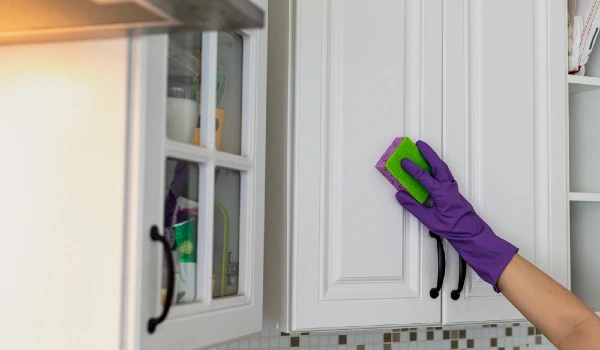
Mild grease stains can be tackled with dishwashing soap and warm water. It can effectively cut through cooking grease and oil splatters from wooden and polished cabinets without damaging the surface.
Mix a few drops of dish soap with warm water in a bowl, then dip a sponge or cloth into it. Ensure you wring out the excess soapy water because excess moisture can warp the wooden surface. Since cabinets are one of the most neglected areas, ensure you scrub the surface to remove stubborn grease and gunk from top to bottom.
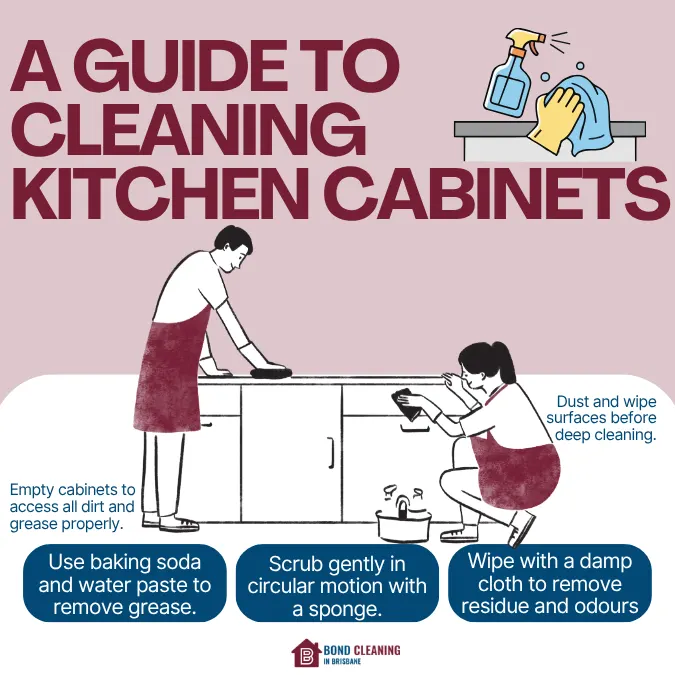
It is good to scrub in circular motion to prevent scratches and nasty streaks. Clean inside and outside the cabinets, including nooks and crannies. In the final step, rinse your sponge and wipe again. Also, buff dry the surface for that extra shine.
3. How to Clean Kitchen Cabinets with White Vinegar?
This is undeniably one of the most effective methods to tackle cooking grease and oil splatters from surfaces. White vinegar is a natural cleaning agent that can effectively break down grease. However, it is always best to use it diluted to prevent damage or dullness. Here’s a brief guide:
- Combine equal parts of white vinegar and warm water, or use less vinegar.
- Add a few drops of dish soap and essential oil.
- Spray the cleaner on the cabinets, but don’t overwet.
- Leave it for a few minutes to cut through grease.
- Wipe down the surface with a damp sponge or microfibre cloth. Use circular motions.
- Dry thoroughly with a clean cloth.
Professional bond cleaning Brisbane experts recommend a spot test before applying any product to delicate surfaces like wooden cabinets. You can test it on a hidden area to prevent costly damage and discolouration.
4. Use Murphy Oil Soap
Fill a bucket with warm water and add three tablespoons of Murphy Oil Soap. It is made from natural oils and can do wonders in removing tough stains, grease, dirt and other gunk from almost all surfaces.
Make sure you reduce water usage and gently wring out a sponge or cloth before wiping down greasy cabinets. For stubborn stains, use a soft bristled brush and scrub in a circular motion. This will help remove grease and gunk without causing any damage.
5. Use Baking Soda to Degrease and Deodorise Cabinets
Baking soda is a mildly abrasive non toxic cleaning agent that can effortlessly remove sticky grime from wood and natural stone surfaces. It can also neutralise bad smells in no time. All you need to do is make a paste of baking soda and warm water. Apply it to your cabinets and scrub gently in circular motions. Make sure you wipe clean with a damp cloth.
6. How to Get Rid of Lingering Smell From Kitchen Cabinets
To banish bad smells from cabinet interiors, first remove food items, such as jars, containers, and boxes. Toss expired or stale items. Make sure you tackle visible stains and residue with a vinegar solution or baking soda.
Next, add ten drops of your favourite essential oil with warm water and spray inside the cabinets. It will neutralise lingering odours in no time. You can also place an open box of baking soda or activated charcoal for strong fumes.
7. How to Prevent Grease Buildup?
Prevention is better than putting extra elbow grease into tackling oil stains and splatters. Here’s how you can prevent grease and gunk buildup in the kitchen:
- Always use an exhaust fan when cooking food, especially when frying.
- Clean spills proactively
- Wipe down cabinets weekly to prevent grease buildup.
- Do not touch the cabinet handle with dirty or greasy hands.
If you are vacating a rental home soon, hire experts for a top quality bond cleaning Brisbane to prevent deductions and disputes.
Infographic: A Guide to Cleaning Kitchen Cabinets
Wrapping Up
Degreasing kitchen cabinets should be your topmost priority when sprucing up your kitchen. You can follow these simple yet effective hacks to transform greasy cabinets into glossy storage units while elevating the look and feel of your cooking space. Happy Cleaning!