Walls, Floors And Windows: How To Deep Clean For Bond Return
Bond returns often slip away not due to any major damage that has occurred, but because of overlooked details. Things like dirty windows, scuffed walls and stained floors are among one of the top reasons why landlords may withhold a part or the entire bond deposit of a tenant. So what’s the solution for this? The answer is simple, a systematic deep cleaning of the entire property, with special focus being given to the trouble spots mentioned just now. If you do this, you’ll definitely walk away with your full bond intact.
This guide will provide you with practical methods to restore your walls, floors and windows to a flawless condition, giving you the best chances of passing the final inspection. Be it tackling the scuff marks or leaving the glass streak free and gleaming, the focus is on simple but effective methods that you can do yourself. For those wanting help, local cleaning experts can also take the stress out of the process while delivering results that meet the required rental inspection standards. Let us start.
Hide
Show
- Why Walls, Floors and Windows Matter Most
- Preparing for a Rental Deep Clean
- How to Deep Clean Walls
- Getting Floors Back to Their Best
- Making Windows Spotless Inside and Out
- Attention to the Little Details
- When to Call in Professionals
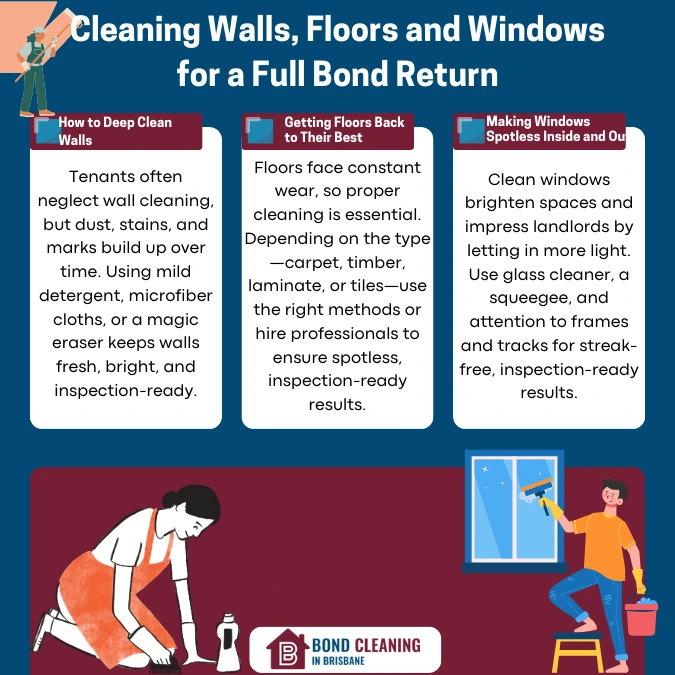
- Infographic For Cleaning Walls, Floors and Windows for a Full Bond Return
- Wrapping Up
1. Why Walls, Floors and Windows Matter Most
During final inspections, property managers and landlords pay particular attention to the visible surfaces of the home. While hidden corners or inside cupboards may receive a quick glance, walls, floors, and windows are impossible to ignore. These places contribute to the overall sense of cleanliness and immediately indicate how well the property has been kept. Even budget end of lease cleaning Brisbane services emphasise on these areas during their cleaning assignments.
Streaked windows can make a property appear lifeless, scuffed flooring suggests carelessness and marred walls indicate reckless living. Even if you’ve been a diligent renter, failing to deep clean these high traffic areas may give your landlord justification to recover a portion of your bond. Taking the effort to restore them not only increases your probability of receiving a full refund, but also puts the property in immaculate condition for the future tenant.
2. Preparing for a Rental Deep Clean
The secret to cleansing is to prepare first. Begin by gathering the right cleaning supplies. For walls, you’ll need mild detergent, microfiber towels, a sponge and possibly a magic eraser for stubborn scuff marks. Floors may require a vacuum, mop, and floor cleaners, whereas windows can be cleaned with glass cleaner, a squeegee and an old toothbrush for the tracks.
It’s also a good idea to clear off the space before you begin. Moving furniture, rugs and curtains frees up space in every area. Creating a checklist might help you keep organised and avoid forgetting tiny but vital activities. Some renters even find it useful to snap photos before and after cleaning, especially if they intend to engage bond cleaning Brisbane pros to perform the more difficult tasks.
3. How to Deep Clean Walls
When tenants clean their apartments, they often neglect the walls. However, they can collect fingerprints, dust and scuff marks with time. Begin by cleaning the walls with a dry cloth or using your vacuum’s brush attachment, to remove cobwebs and loose debris. After the dust has been removed, use a mild cleaning solution of warm water and a few drops of detergent. Dip a microfiber cloth or sponge into the liquid, wring it out well, then gently wipe the walls in a circular motion. To prevent paint damage, always test a small, inconspicuous spot first.
A magic eraser may remove tougher stains, such as crayon or shoe prints, without harming the paint. Pay particular attention to high traffic locations such as hallways, kitchens and light switches, as they are the most worn. Clean walls quickly brighten the space and prepare it for a home inspection.
4. Getting Floors Back to Their Best
Floors are subjected to daily wear and tear, so it’s understandable that landlords pay special attention to them. The manner of cleaning will depend on the type of flooring in your home.
- Carpeted floors should be vacuumed thoroughly, followed by spot cleaning of stains using an appropriate carpet cleaner. If stains are extensive or odours persist, hiring a professional steam cleaner may be necessary, and in many cases, it’s actually required under tenancy agreements.
- Timber or laminate floors require a lighter touch. Sweep or vacuum first, then mop with a damp (not wet) towel to avoid swelling, and water damage. Use wood cleaners to restore gloss, and prevent streaks.
- Tile flooring are more forgiving, but still require maintenance. Scrub grout lines with a brush and appropriate cleaner, as discoloured grout is one of the first things property managers notice.
If the process appears overwhelming, many tenants find it beneficial to hire bond cleaning Brisbane specialists who frequently incorporate skilled floor treatments as part of their service.
5. Making Windows Spotless Inside and Out
Clean windows not only impress landlords but also allow more light into the space, making it feel fresher and more inviting. Begin by cleaning blinds or washing down curtain rods, which can shed material onto freshly cleaned glass. Next, spray the panes with a premium glass cleaner or a vinegar and water solution. To avoid streaks, wipe with a continuous motion, either horizontal or vertical. A squeegee is particularly effective for leaving windows crystal clear.
Don’t forget the window tracks and frames. These frequently entrap debris, dead insects and dust. To remove grime, use an old toothbrush or cotton buds immersed in soapy water, followed by a moist towel. Clean the windows inside and out as possible as landlords typically inspect both sides during inspections.
6. Attention to the Little Details
While walls, floors and windows, form the core of your cleaning checklist, small details can make a big difference in passing inspection. Wipe down skirting boards, polish door handles and clean light switches. If you have sliding doors, vacuum the tracks. Check for cobwebs in corners, and dust ceiling fans or vents. Taking care of these finishing touches, shows your landlord that you respect the property. It also eliminates any simple reasons for withholding your commitment, giving you more peace of mind.
7. When to Call in Professionals
No matter how determined you are, some things are best left to the specialists. Stubborn carpet stains, deeply ingrained wall marks and widespread mould on windows, can be nearly impossible to remove without specialised equipment. In these circumstances, hiring a professional bond cleaning service can save you time and money by ensuring the property fulfils inspection requirements. Ensure you do proper research to know the estimated cost of a professional bond cleaning for your peace of mind.
Reputable firms usually include a bond back guarantee, which means they will return free of charge, to resolve any issues mentioned by your landlord. This assurance, may be worth the expense, particularly if your schedule is tight or the property is huge.
Infographic For Cleaning Walls, Floors and Windows for a Full Bond Return
Wrapping Up
Securing your bond return comes down to preparation, attention to detail and tackling the key areas landlords scrutinise most: walls, floors and windows. You can leave the property pristine and stress free by using the proper cleaning methods or hiring a professional. By putting in a little additional effort before turning over the keys, you’ll increase your chances of receiving your whole bond back and moving on to your next property with confidence.