
What Are The Pros And Cons Of Cleaning With Vinegar?
Cleaning products come in all shapes and sizes, but one household item has remained a favourite for generations: vinegar. Known for its versatility and affordability, vinegar is usually promoted as a natural alternative to commercial cleaning products. From kitchen counters to bathroom fixtures, many homeowners rely on it to tackle everyday dirt and grime.
However, while vinegar offers several benefits, it is not a one size fits all cleaning solution. This article will provide you with the pros and cons of cleaning with vinegar. Understanding where it works well and where it falls short can help you clean more effectively and avoid damaging surfaces. Whether you’re maintaining your home or preparing for a final inspection with the help of bond cleaning Brisbane professionals; it is important to know the pros and cons of cleaning with vinegar.
Hide
Show
- Why Is Vinegar a Popular Natural Cleaning Solution?
- What Are the Main Benefits of Cleaning with Vinegar?
- How Does Vinegar Help Eliminate Odours?
- What Are the Limitations of Cleaning with Vinegar?
- Which Surfaces Should Never Be Cleaned with Vinegar?
- Can Vinegar Replace All Household Cleaning Products?
- Is Vinegar Suitable for End of Lease Cleaning?
- Infographic: How to clean with vinegar?
- Wrapping Up
1. Why Is Vinegar a Popular Natural Cleaning Solution?
One of the biggest reasons vinegar is widely used for cleaning is its natural composition. White vinegar contains acetic acid, which helps dissolve dirt, grease, soap scum, and mineral deposits. Unlike many chemical cleaners, it does not leave behind strong synthetic residues.
Another advantage is its affordability and accessibility. Vinegar is available in almost every grocery store and costs significantly less than specialised cleaning products. This makes it an attractive option for households, looking to reduce cleaning expenses, without compromising on cleanliness.
2. What Are the Main Benefits of Cleaning with Vinegar?
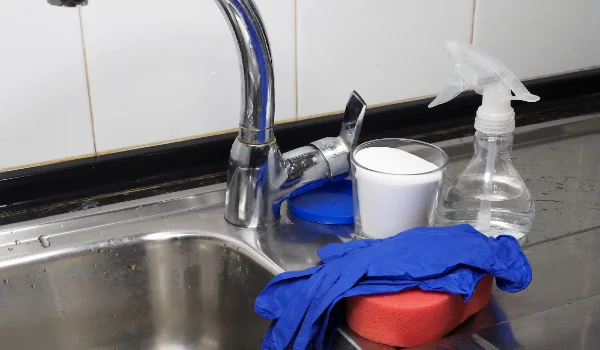
Vinegar offers several advantages that make it a popular household cleaner:
- Removes hard water stains from taps, shower screens, and sinks.
- Breaks down soap scum and mineral deposits effectively.
- Cuts through light grease on kitchen surfaces.
- Affordable and widely available in supermarkets.
- Eco friendly and biodegradable making it a sustainable cleaning option.
- Free from many harsh chemicals found in commercial cleaners.
These benefits make vinegar a practical choice for everyday cleaning tasks around the home while helping reduce cleaning costs.
3. How Does Vinegar Help Eliminate Odours?
Vinegar is known for its ability to neutralise unpleasant smells rather than simply masking them. It can be used to freshen up refrigerators, rubbish bins, microwaves, and other areas where odours tend to linger.
Although vinegar itself has a strong smell, the odour usually fades as it dries. This makes it a practical solution, for eliminating common household smells without relying on heavily fragranced products that may trigger allergies or sensitivities.
4. What Are the Limitations of Cleaning with Vinegar?
Despite its usefulness, vinegar also has a few drawbacks:- Not a strong disinfectant compared to commercial antibacterial cleaners.
- Less effective on heavy grease and stubborn stains.
- Cannot eliminate all bacteria and viruses.
- May damage certain surfaces due to its acidic nature.
- Has a strong smell that some people find unpleasant.
- Not suitable for specialised cleaning tasks, such as mould removal or sanitising high touch areas.
Understanding these limitations can help you decide when vinegar is the right cleaning solution and when another product may be a better choice.
5. Which Surfaces Should Never Be Cleaned with Vinegar?
Vinegar’s acidic nature can damage certain materials. Natural stone surfaces such as marble, granite, and limestone should never be cleaned with vinegar because the acid can cause etching and dull the finish over time.
It should also be avoided on hardwood floors, waxed furniture and some electronic screens. Repeated exposure can weaken protective coatings and lead to permanent damage. Always check manufacturer recommendations before using vinegar on delicate surfaces.
6. Can Vinegar Replace All Household Cleaning Products?
While vinegar is excellent for many everyday cleaning tasks; it cannot completely replace all household cleaners. Different cleaning challenges require different solutions and relying solely on vinegar may leave some areas inadequately cleaned or sanitised.
For example, disinfecting high touch surfaces, removing mould, or cleaning delicate materials often requires specialised products. A balanced approach that combines vinegar with other suitable cleaning solutions usually delivers the best results.
7. Is Vinegar Suitable for End of Lease Cleaning?
Vinegar can be a useful tool during end of lease cleaning because it helps remove soap scum, hard water stains, and general dirt from various surfaces. It is especially effective in kitchens and bathrooms where buildup tends to occur over time.
However, rental inspections often demand a high standard of cleanliness. Many tenants choose professional bond cleaning Brisbane services to make sure that every area meets landlord expectations. While vinegar can assist with routine cleaning, it may not be enough to achieve inspection ready results on its own.
Infographic: How to clean with vinegar?

Wrapping Up
Vinegar is a simple, affordable, and environmentally friendly cleaning solution that offers many benefits. At the same time, vinegar has its limitations. It is not suitable for every surface, and it cannot replace all cleaning products. Understanding its strengths and weaknesses can help you use it safely and effectively. Whether you’re maintaining a clean home or preparing for a move with the assistance of bond cleaning Brisbane experts, knowing when and how to use vinegar can make your cleaning routine more efficient and successful.